
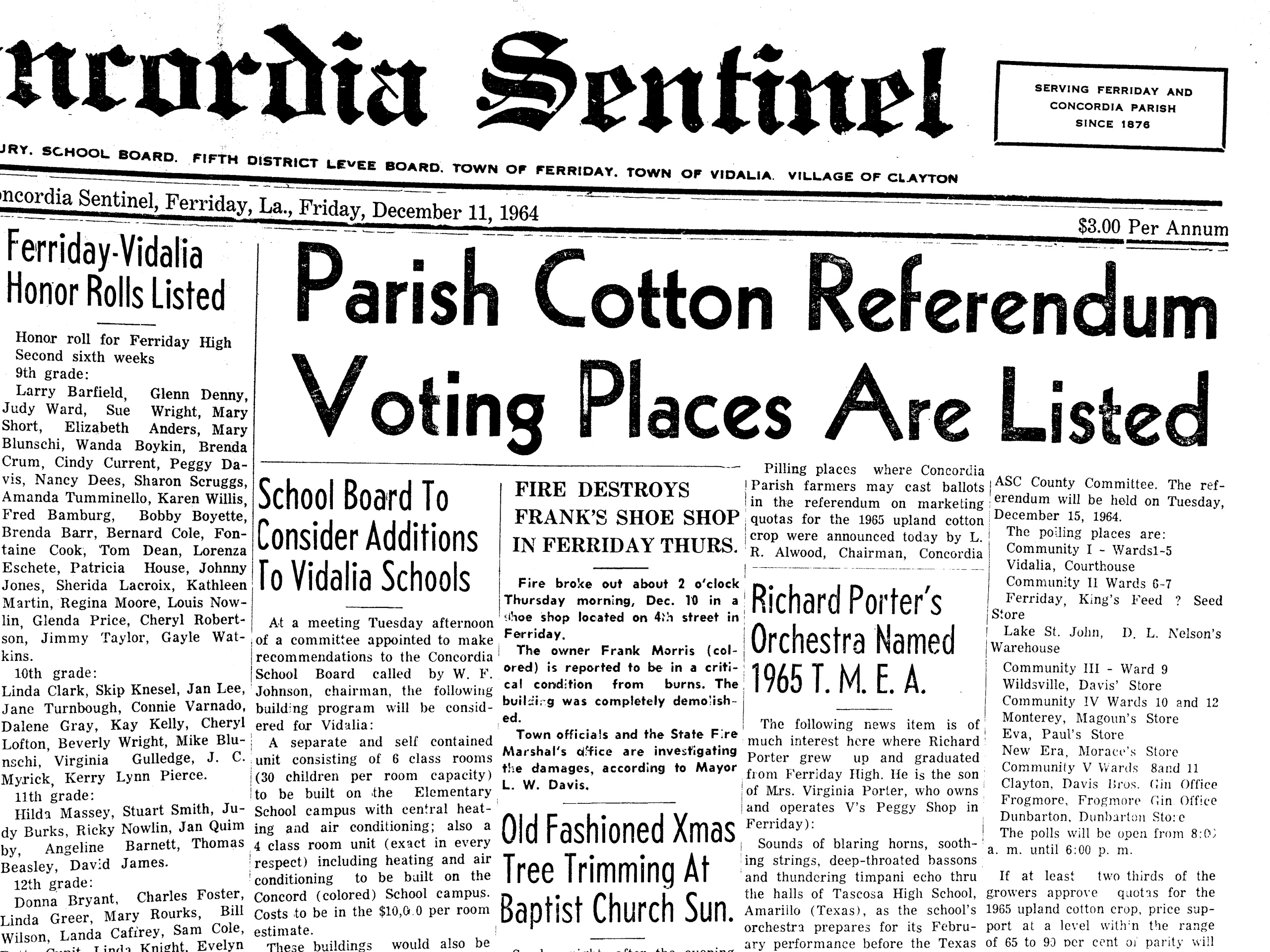


On the night of December 10, 1964, in Ferriday, Louisiana, members of the Ku Klux Klan set fire to Frank’s Shoe Service.
Frank Morris, a Black businessman and the owner of Frank’s Shoe Service, lived and worked along the Ferriday-Vidalia Highway. For years he repaired soles and broken heels—a vital service in rural Louisiana in the 1940s and 1950s. His shop was more than a business; it served as a community hub where Morris mentored young Black men. It was also one of the most successful Black-owned businesses in the area.
That night, when Morris heard the sound of breaking glass and tried to escape through the front door, a white man with a shotgun forced him back inside. The shop—and Morris’s adjacent home—burned with him trapped inside. Four days later, at the age of fifty-one, Frank Morris died from third-degree burns.
Today, the foundation of his store still rests beside the highway in Concordia Parish, a quiet reminder of what once stood there.
No one has ever been convicted of the crime. Investigators identified several suspects at the time. In 2007, the FBI reopened the case as part of the Emmett Till Unsolved Civil Rights Crime Act cold case initiative, closing it again in 2014 without charges. Morris is believed to have been murdered by members of the Ku Klux Klan, including Arthur Leonard Spencer and Coonie Poissot of the Silver Dollar Klan. Also implicated was Deputy Sheriff Frank DeLaughter, who was suspected in the disappearance of Joseph Edwards, a young Black man who vanished earlier that year from the same highway.
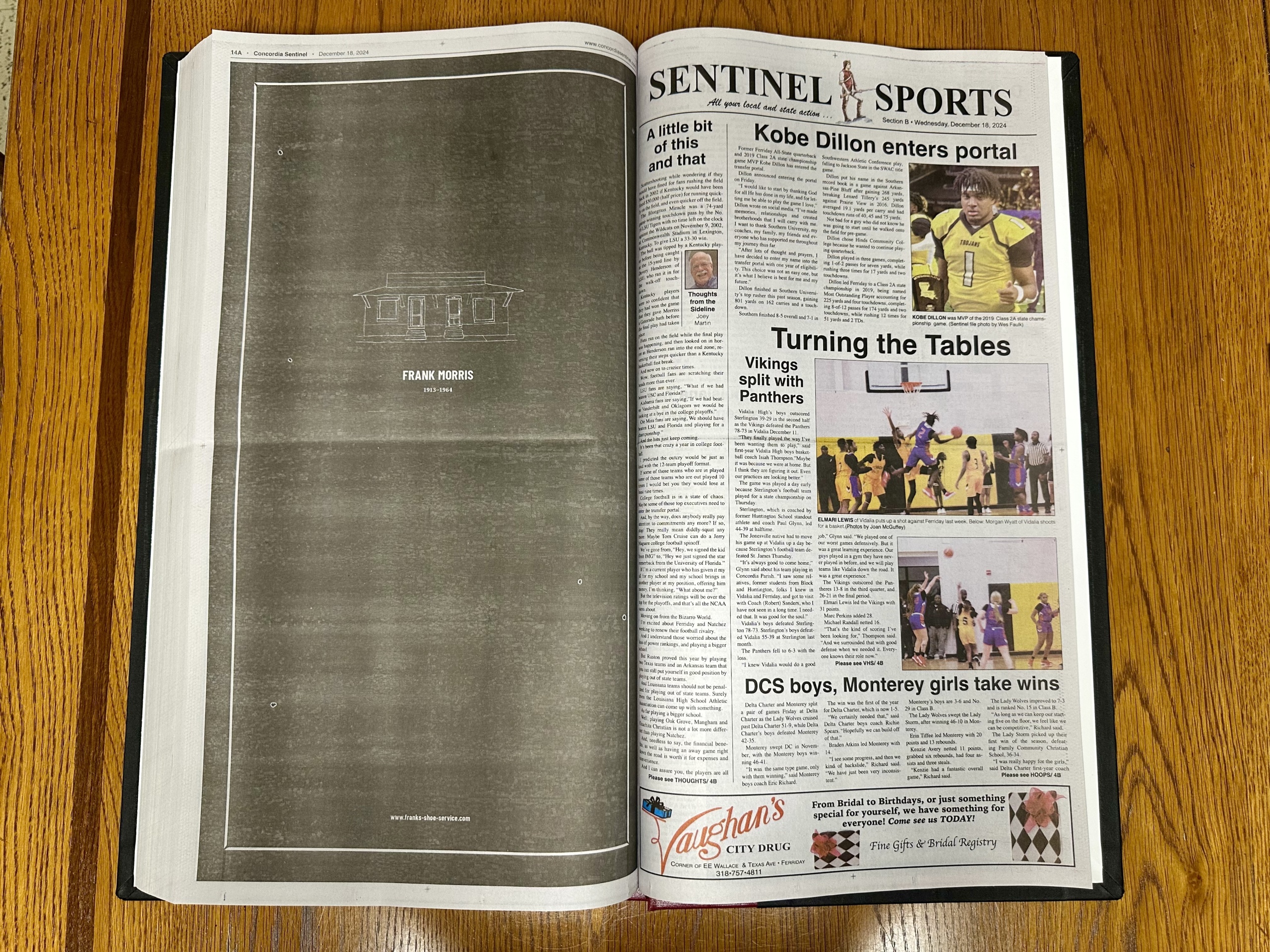
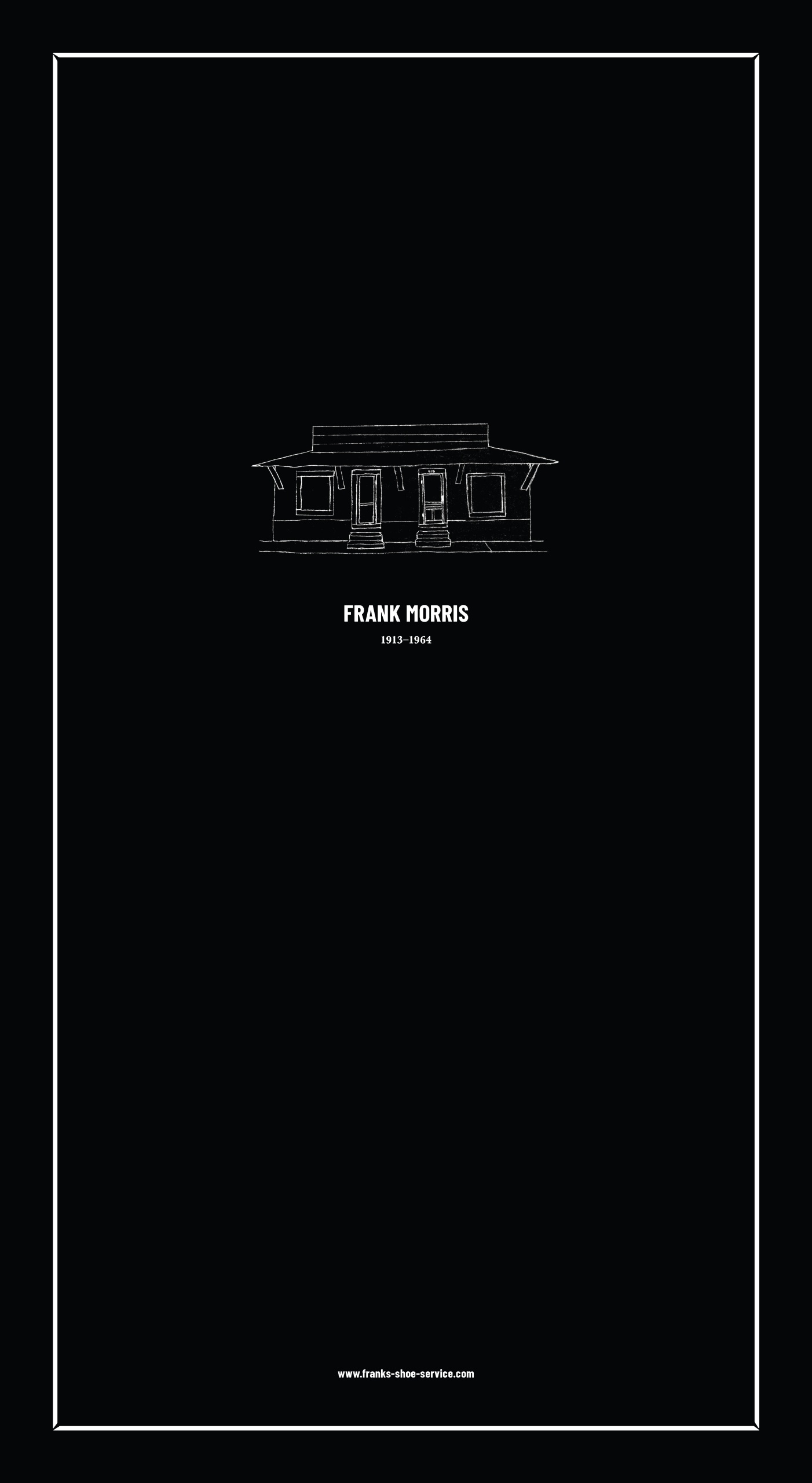
For twenty years, Frank Morris placed a small advertisement for Frank’s Shoe Service in the weekly newspaper, The Concordia Sentinel. Week after week, the notice appeared among local announcements and headlines—evidence of his steady presence in the town’s life.
The week Morris was murdered, the advertisements disappeared.
This project returns to that absence. In December 2024, I began reprinting Morris’s advertisements in The Concordia Sentinel, placing them back into circulation each week for one year. Through December 2025, the ads reappear within the shifting context of contemporary headlines, situating his life and death within ongoing conversations about race, memory, and justice.
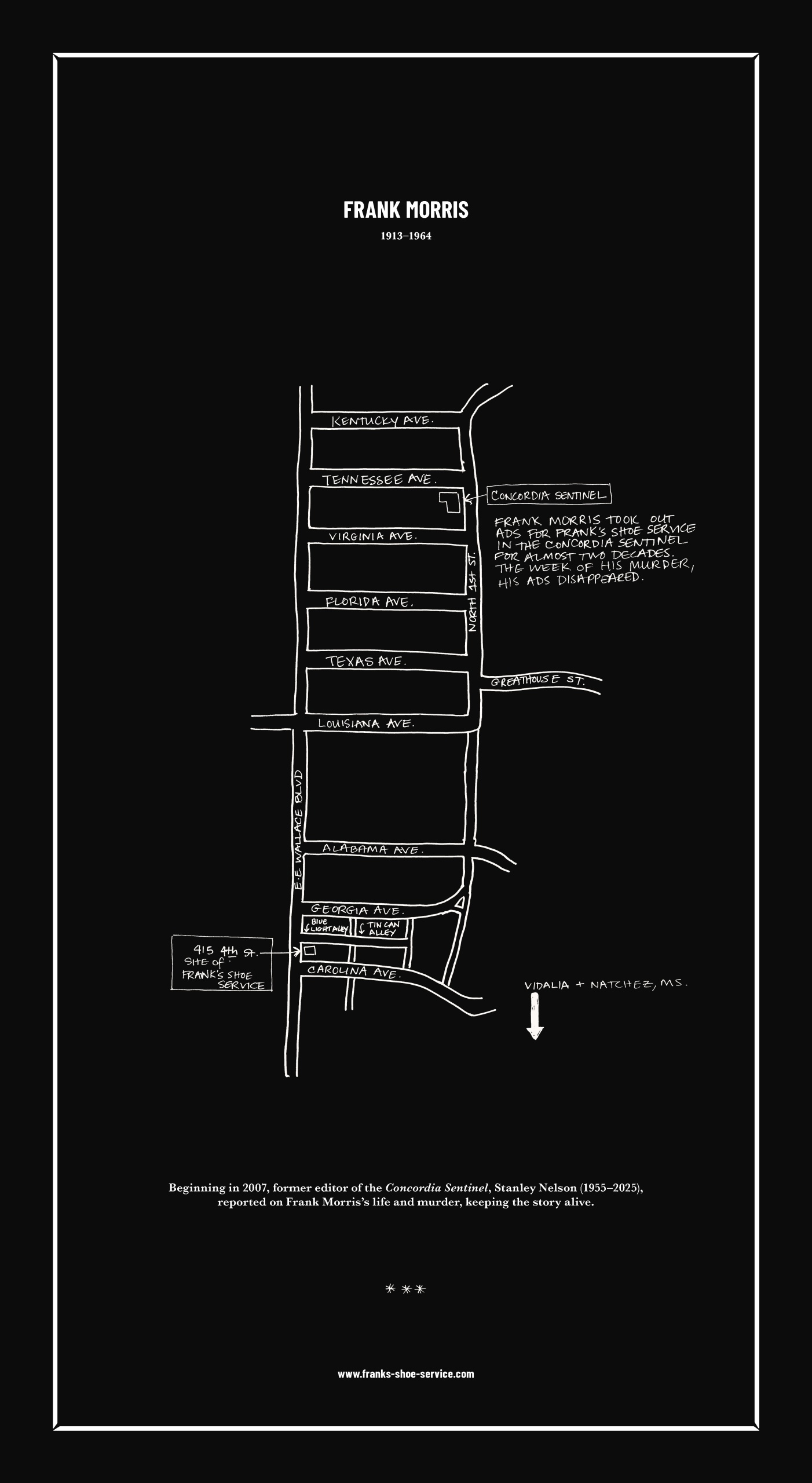
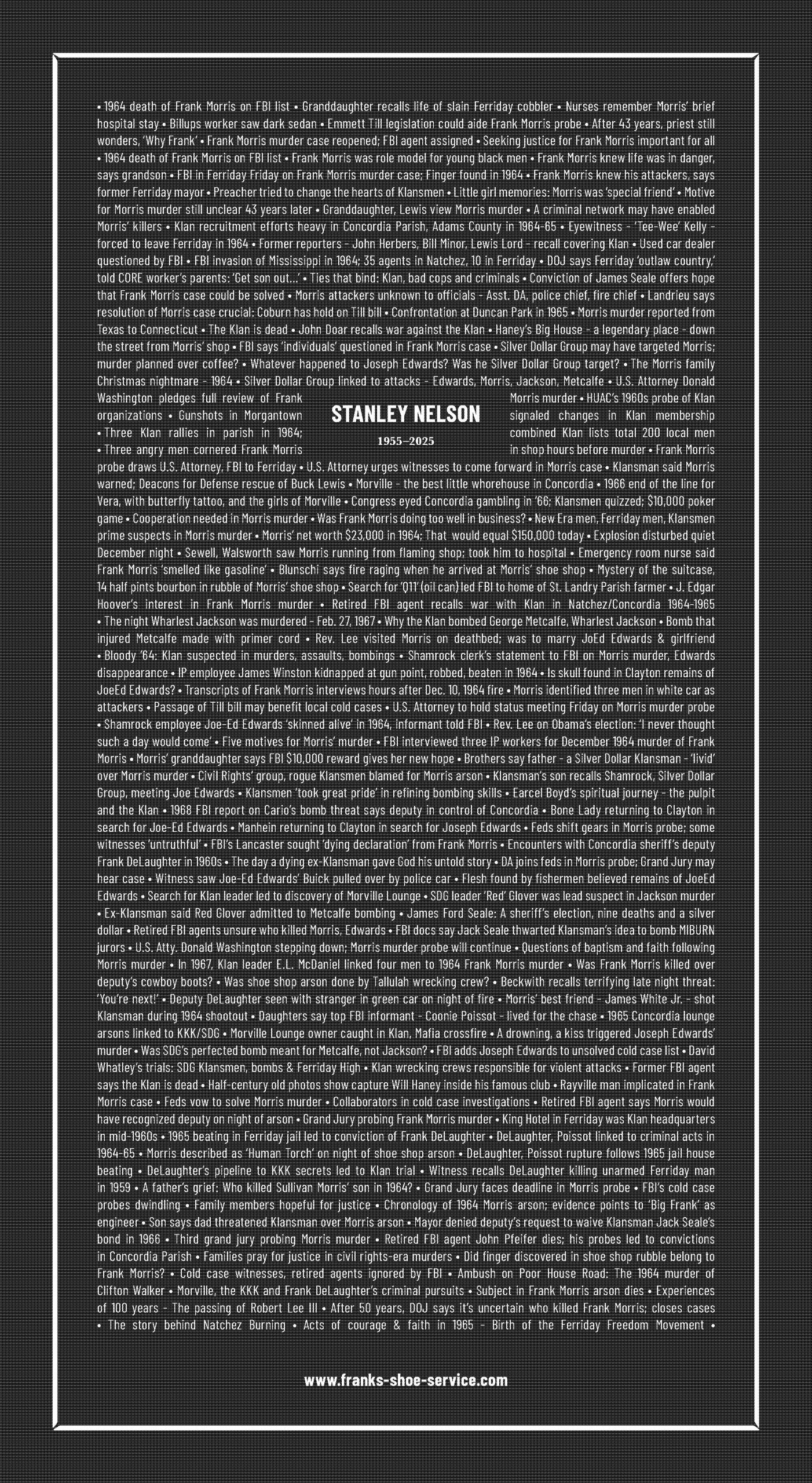
Stanley Nelson, local investigative reporter and editor of The Concordia Sentinel in Ferriday learned of Frank Morris’s murder when the Justice Department reopened the case. Nelson spent years reporting on Frank Morris’s life and murder in the weekly paper, keeping the story alive in the public memory. Nelson died suddenly in 2025 and I memorialized his reporting as part of this project with a full page ad of his headlines.
In parallel, the project extends into the community. Working with the local NAACP, I was part of a small group who planned a memorial for Frank Morris in Ferriday on the 60th anniversary of his murder. I connected a website to the project and began collecting oral histories from community elders who remember Morris and who lived in Ferriday and nearby Vidalia during that time.
The work is grounded in acts of return—of reappearance, remembrance, and record. The foundation beside the highway endures, as do the memories carried by those who remain. And the advertisements, re-placed in the local paper, bring Frank Morris’s back into the present, and carried forward into the archive for the future.
Jessica Ingram is the author of Road Through Midnight: A Civil Rights Memorial (University of North Carolina Press, 2020), which includes the murders of Frank Morris and Joseph Edwards.