
The Feminist Interview Project, organized by CAA’s Committee for Women in the Arts, examines the practices of feminism by interviewing a range of scholars and artists. The project aims to preserve the living histories of feminist art practices, while interrogating and expanding the boundaries of what might be considered feminist. Throughout its interviews, this project reimagines the possibilities of feminist practice and feminist futures by exploring a diversity of perspectives and approaches to research. This collection of interviews aspires to critically examine the relationships between feminism, feminist art, and the lived realities of women, nonbinary and female-identified artists and scholars across the globe.
For our ongoing collaboration with Art Journal Open, the Feminist Interview Project is excited to present US artist Joyce Kozloff in conversation with curators and authors Maura Reilly and Helena Reckitt. Kozloff responded to a series of questions from Reilly and Reckitt over email in April and May 2026.

Our first question, which every Feminist Interview Project exchange kicks off with, is, What does feminism mean to you?
The first time I heard Linda Nochlin speak, in 1970, she said, “Feminism is justice.” I can go with that!
When did you realize there was such a thing as inequality of the sexes, or that firm societal expectations were set upon women?
My family didn’t want me to go to art school. We had big fights when I was in high school. They wanted me to go to a girls’ liberal arts college and marry a lawyer who would join the family firm. I come from a line of small-town New Jersey lawyers. The women were housewives, who were active in community organizations. In a sense, I was liberated by being a girl, as no one expected me to become a lawyer! I was rebellious, wanted a different kind of life, but I knew nothing about the obstacles out there in the world. It became obvious in college and, especially, in graduate school, as male students were always favored and encouraged.

Your feminist activism began in the early 1970s. In 1971, for instance, as a member of Los Angeles Council of Women Artists (LACWA), you released a report protesting the low numbers of women included in exhibitions throughout LACMA’s history, including their current exhibition, Art and Technology, which featured no women at all.1What prompted your choice to use statistics to highlight this neglect of women artists?
I was one of the LACWA organizers; the first meeting was at my apartment in 1971. I was new to LA, the art scene there was a real boys’ club, and the women were angry. At the first meeting, Channa Horwitz brought the catalog for that exhibition. The cover featured a grid of sixty-four faces, the artists who participated in the project, not all of whom were in the final show, only men. Our method of collecting statistics was simple: we went to the museum and counted works on the walls in the permanent collection. Only one work by a woman was present, portrait painter Elisabeth Vigee-Lebrun (1755–1842). It was large, hanging on a stairwell landing. Then we went to their library and counted catalogs of solo shows. There was only one by a woman, photographer Dorothea Lange (1895–1965), and the exhibition had been twenty years prior. It wasn’t hard to present our case, and, by the way, no one has ever contested these statistics. I dream of a day when we can stop counting. Statistics are the logical “proof” of discrimination.
You joined a feminist Consciousness Raising group in Santa Monica at the invitation of Phyllis Stein who, like you at the time, was a so-called faculty wife. Do any particular sessions stand out? Did you continue to participate in CR groups after this formative experience? And do you think CR is still a potentially radicalizing tool for feminism today?
I met Phyllis, a fellow East Coast transplant, during the opening year of Cal Arts, 1970, at a faculty gathering in the home of Allan and Fern Kaprow. She said that she was looking for a consciousness-raising group. I didn’t even know what that was, but when she explained, I was interested. Phyllis added our names to a list at the women’s centre in Santa Monica with others who had signed up. They had different degrees of education, class backgrounds, marital status, ages. None of them were artists. We followed the rules and list of basic topics designated by the center: How do you feel about your mother? How do you feel about your body? We were all radicalized within weeks. Relationships ended, it was a rocky period in my own marriage!
In fall 1971 I moved back to New York with my husband, the writer and artist Max Kozloff. I started a CR group with others who lived in my building and neighborhood (106th and Broadway). None of them were artists and, again, it was quite diverse. CR was a great support system for me as a wife, mother, and aspiring professional. I don’t know if it would work the same way today, maybe? We didn’t have cell phones!
To continue the work which had been so formative and exciting for me in LA, I joined the Ad Hoc Committee of Women Artists, which for several years had been staging demonstrations at museums in New York against the gross underrepresentation of women in exhibitions and amassing a national slide registry. As part of that group, Nancy Spero and I edited a tabloid publication, the Rip-Off File, in which women artists told stories of art world discrimination, naming names (Kozloff and Spero, 1973)!
You were one of the first people [we know of] to teach a course in feminist art in the US [besides Linda Nochlin, Judy Chicago, Miriam Schapiro]: at the School of Visual Arts, New York, in 1973, when you taught a course originally proposed by artist May Stevens, and then at the University of Mexico in 1978. What was the content of these courses? Was it difficult to find teaching materials? Do you have any idea of the impact of these classes on participating students?
May had taught at SVA for many years and wrote the feminist course description, which I believe had been earlier proposed by curator Marcia Tucker. But then, May was invited to teach elsewhere that year and asked me to take on her classes, both at SVA and Queens College, my introduction to college-level teaching! It was supposed to be a seminar, but about fifty students enrolled. I brought in outside speakers, and we made studio visits (including a memorable one to Louise Bourgeois). Students were assigned readings and papers, and I gave lectures on the history of women in art. We produced a publication, Interviews with Women Artists (Kozloff, 1975 and 1976), published by SVA. On her return at the end of the year, May taught the class.
We women were troubadours, teaching around for years. We’d hand our jobs to the next feminist artist.
At the University of New Mexico, again there were way too many for a seminar (I cut off enrollment at sixty-five). Jaune Quick-to-See Smith didn’t get in and teased me about it in later years. There was such a need for these classes! Art faculties were still all-male, but women students were quickly becoming vocal, as feminism was getting a lot of media attention. I divided the UNM class into groups for final projects. One group created a mural across a whole building downtown. Another made a quilt together. Because university slide libraries did not include women, I asked all the women artists I knew to loan me their slides, which I duplicated and gave to slide librarians everywhere I went, and made a lecture about feminist art that I showed at various universities. Other women artists were doing this too!
The best students stay in touch. Some became lifelong friends. We women were troubadours, teaching around for years. We’d hand our jobs to the next feminist artist. Max and I were both hired at UNM—at the same salary—by the supportive chairman, art historian Nicolai Cikovsky, the only time that ever happened. I know that these courses had an impact, I’m proud of that.
Beyond the classroom, how did you start to share your growing knowledge of women artists?
In 1974, I chaired a panel, “Women Artists Speak on Women Artists” at the College Art Association’s annual meeting. Miriam Schapiro, a member of the organization’s board, put me up to it—it was hard to say no to Mimi! I found artists who had predecessors whom they wanted to research and honor. I remember so well how scared I was, in front of that audience. It was packed, standing room only, the young art historians taking notes, perhaps looking for topics for their dissertations. Our subjects are now mostly famous, but they were little known at the time.2 The panel was repeated for several years afterwards, with different moderators, participants, and subjects. And we published our talks a few years later, May Stevens helped me edit them (Kozloff and Stevens, 1978).

Then in the summer of 1975, Joan Semmel was renting a house in Springs with her son Andy. She invited me to come out with my son Nikolas for a while. We decided that the Hamptons, the bastion of AbEx, should have a feminist show! We contacted the older generation of women, who mostly lived there year-round, and the members of our generation who were camping out for the summer. We named it “Women Artists Here and Now,” somehow procured Ashawagh Hall, made a poster with Presstype and put it up on trees, sent out invites and press releases. A dancer, Frances Alenikoff, organized two evenings with Women Artists Filmmakers and an evening of performances, one of which was Carolee Schneemann’s now iconic Interior Scroll.

This burgeoning feminist art network consolidated in Heresies (1977–93), the magazine you co-founded, and for which you co-edited an issue on women’s traditional arts. Planning for Heresies started at a weekend retreat at a farm in Pennsylvania belonging to the artist Joan Snyder, to which some of you brought your children, and which started with the experience of telling your life stories (Kozloff and Richards, 2011). Can you recall what was so important about this process of sharing your stories and how this experience might have contributed to the texture of your collaboration on the magazine?
The magazine was Michelle Stuart’s idea! She and I were doing the laundry (she’s my neighbor) and she said that although there were several publications (Women Artists Newsletter, The Feminist Art Journal) with monographic pieces, there was no magazine exploring the ideas we were interested in. We invited friends to discuss: some wanted to work on a magazine, some wanted to work on a feminist art school (N.Y. Feminist Art Institute, 1979–90), some wanted to work on both, some wanted to work on neither. Michelle and I were in the publication group!
That group had been meeting in our lofts for a while before the retreat at Joan’s farm, but there was never enough time. She and her husband, photographer Larry Fink, were in the kitchen cooking big pots of chili. Twenty women participated. Harmony Hammond brought her daughter Tanya, Lucy Lippard brought her son Ethan, Mary Beth Edelson brought her son Nick, and I brought Nik. We slept in sleeping bags in the barn. Each of us told our life stories, which were sometimes quite emotional and moving. I think it was recorded, but no one remembers what happened to the tapes. We had blackboards, divided ourselves into six working groups, everyone had to sign up for one. I was on the mailing committee, the Nocturnals, I called us. We happened to all be nighthawks, so we did our work together after dark. And at the retreat, the group excitedly chose the topics for the first six issues, which were subjects we were passionate about.
When they arrived, we realized that in many cultures these traditions were a form of oppression (e.g., little girls going blind making lace for the European courts, very young women forced to work on looms under terrible conditions throughout the Middle East). We had been naive at first but, in the end, the complexity and contradictions reflected our research. Today, this would be called cultural feminism.
In the beginning, one member of the Mother Collective had to be on each issue’s editorial group. That later changed. Outside groups—like women architects, composers, Latina women artists, and a Russian collective—proposed issues to the Mother Collective that were published, with the editing and design basically turned over to them. I was not a member for long; I left after my issue in 1978, too busy with the rest of my life. I do remember that Mary Beth Edelson proposed an issue on the Great Goddess at the very beginning. The rest of us, secular feminists, were inwardly groaning. But she formed a Goddess Collective and it turned out to be our most successful issue, the only one, apart from the sex issue, that went into a second printing!
The issue that I co-edited on women’s traditional arts was subtitled The Politics of Aesthetics. At first, rather ambitiously, we wanted to celebrate the arts of women, globally. Anthropologist Elizabeth Weatherford solicited articles from her colleagues. When they arrived, we realized that in many cultures these traditions were a form of oppression (e.g., little girls going blind making lace for the European courts, very young women forced to work on looms under terrible conditions throughout the Middle East). We had been naive at first but, in the end, the complexity and contradictions reflected our research. Today, this would be called cultural feminism.
During one meeting of the editorial group, Valerie Jaudon mentioned that for several years, she’d been collecting quotes about the prejudice against the decorative. I started to look for them too. Together, we organized them into a kind of literal collage: “Art Hysterical Notions of Progress and Culture,” which appeared in that issue and to our surprise and delight, has been reprinted and anthologized at least a dozen times, in many languages.


This reclamation of decoration is central to your own artmaking. Your 1979–80 installation An Interior Decorated, for instance, takes a feminist approach to interior design, which, like craft and decorative traditions, is often negatively associated with femininity as well as (more recently) homosexuality. Your reclamation of the female realm also extended to your artistic use of cooking utensils, such as variously shaped cookie cutters. Do you think it was this embrace of interior design and decoration that provoked such strong critical reactions to the piece—so intense that they prompted you to go back into therapy, you have said (Kozloff and Richards, 2011)?
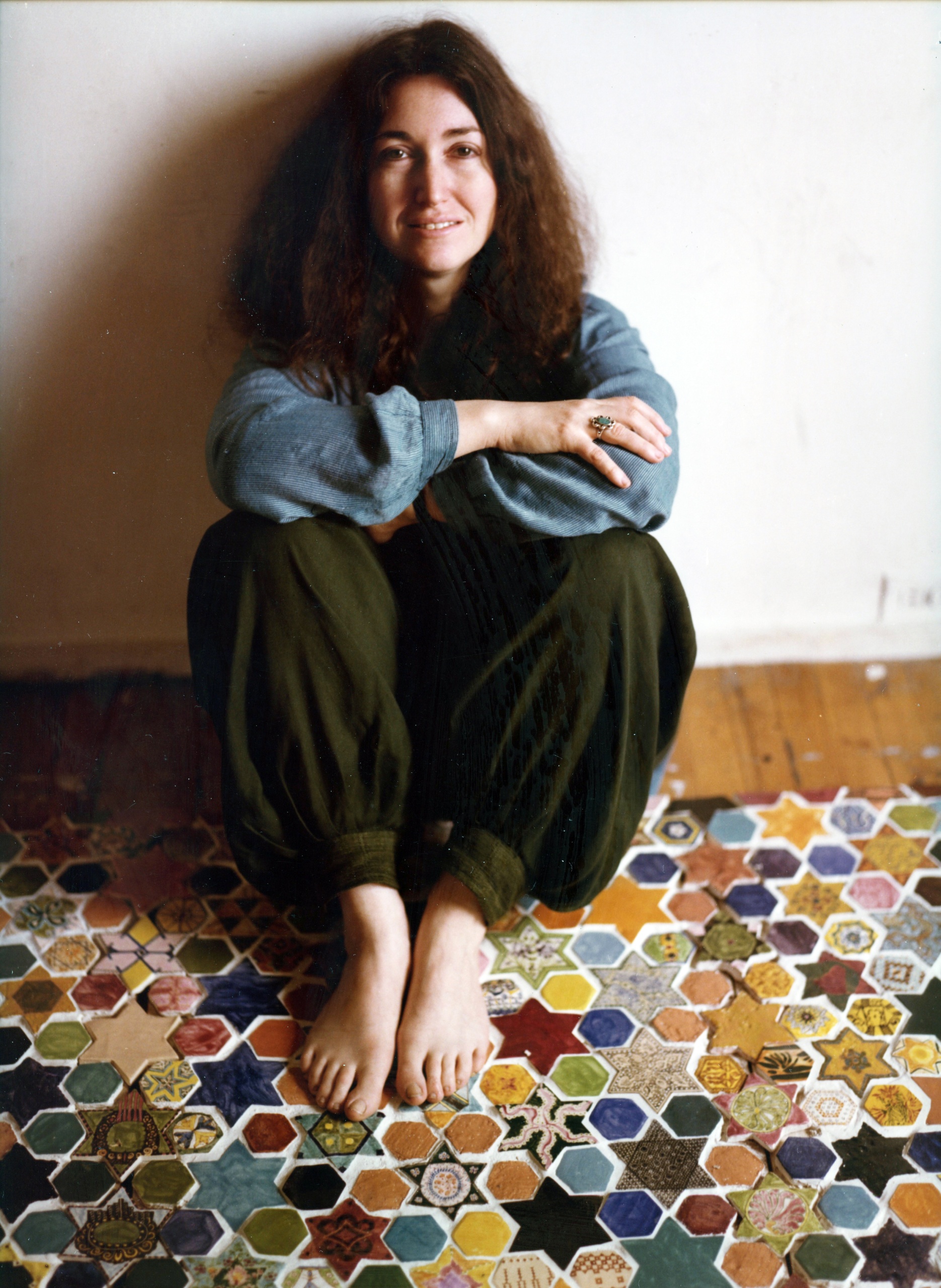
Calling the installation An Interior Decorated was a provocation, drawing upon the decorative arts of many traditions, and evoking women and domesticity. I saw it as an homage; others saw it as cultural appropriation! This was a relatively new idea. I was not prepared for the firestorm that it drew. I’d speak to an audience at a college about breaking down the hierarchies between high art and craft. People working in crafts (ceramics, textiles) in the audience would be outraged, feeling condescended to. Today, so much of contemporary art incorporates craft media, but this was during a time when formalism still dominated the art world.
It became a laboratory for the real life contingencies, both practical and political, that I later faced in public art: finding materials, themes, and processes adaptable to site specific conditions. You must decide which compromises you can make, and stand your ground if confronted by unacceptable choices.
My original idea was to totally decorate the room [the Tibor de Nagy Gallery on 57th Street, where the work was first shown in 1979]. Until then, I’d only created paintings on canvas, so this was a huge stretch. I wanted to insert the tiles into the floor, so it would be seamless. But Tibor insisted that I put them on a platform, so women in high heels wouldn’t trip and sue the gallery. I wanted the entire ceiling of the gallery to be billowing silk, blue and silver, printed with Islamic star patterns, like the night sky, but I was told it would interfere with the gallery’s lighting system. Within my limited resources and skills, I found approximations, substitutions. I adapted An Interior Decorated to three subsequent venues [the Everson at Syracuse University, the Mint Museum in Charlotte, North Carolina, and the Renwick Gallery in Washington, DC], each presenting new challenges. It became a laboratory for the real life contingencies, both practical and political, that I later faced in public art: finding materials, themes, and processes adaptable to site specific conditions. You must decide which compromises you can make, and stand your ground if confronted by unacceptable choices.

You co-founded the Pattern and Decoration (P&D) movement in the early 1970s. Like Miriam Schapiro’s femmage, Judy Chicago’s china painting, and Faith Ringgold’s narrative quilts, P&D opened the path for reevaluating anonymous art, including that primarily produced by women. These artworks validated and honored women’s traditional activities, or those who had historically done invisible “women’s work.” Some P&D artists were criticized for their “surprising and problematic” appropriation of the art of other cultures, as Peggy Phelan notes (2025). What was your approach at the time and how have you more recently handled the politics of paying homage to systemically underrecognized artists and makers?
We were (and still are) called cultural imperialists, which hurt deeply, as we saw our appropriations as homage, not theft! To be real, artists have always appropriated, we are larcenous by nature. But we were naive in the 1970s and did not anticipate this criticism. Today with the internet, artists all over the planet are copying one another. But I have become more sensitive to this issue, and maybe that’s why I’ve been more focused on my own country’s history.
While widely celebrated during its rapid emergence, P&D did attract criticism, as noted. Donald Kuspit condemned the movement for being not just self-righteously heroic but authoritarian. In her reevaluation of appropriation strategies in the work of both P&D artists and those associated with the Pictures generation, Jenni Sorkin argues that P&D, unlike Pictures, “has never received due credit or critical acknowledgment for its rigor” (Sorkin, 2019). What are your thoughts on this critical oversight and bias?
Kuspit’s piece was an attack, dividing good and bad feminists, even among friends. He was a partisan, advocating for feminists whom he admired, as though there wasn’t room for diversity in approaches! Can you imagine a man trying to establish these hierarchies? In the first place, half the P&D artists were men. There was mutual respect among us. I often say that these men were female-identified, not necessarily in their sexual orientation, but in their openness to the feminine in visual culture. However, we were supplanted not only by the Pictures generation, but by the Transavangaurdia movement in Italy and Neo-Expressionism in Germany and the US. I always associate the moment of their rise with the election of Ronald Reagan as United States President! The experimentation and messiness of ’70s feminist art (performance, video, installation, craft, the body, and female sexuality) had little market value compared to the new, more macho, explosive forms of painting.
Everywhere I look, I see P&D, all over the world: artists absorbing their own traditions. It’s exciting but it would be nice if our early embrace of the decorative arts, when it was harder to do, were acknowledged as a precursor once in a while!
I liked Sorkin’s essay, found it surprising, never thought about the confluence, and I think she’s right. We were on the defensive, they were calling us “essentialist” (bad!) There was little theory in the ’70s art world, but it came on strong in the ’80s. We may have assumed that the next generation of feminist artists would follow in our footsteps, but it never happens that way! Thinking about gender as constructed, rather than assumed, interested me, but we were so reviled for a while. Later generations took from both groups and are building new hybrids. I didn’t suffer as much as some of my fellow P&D artists, as I was moving away from the gallery world into public art. Everything moves so fast now. Everywhere I look, I see P&D, all over the world: artists absorbing their own traditions. It’s exciting but it would be nice if our early embrace of the decorative arts, when it was harder to do, were acknowledged as a precursor once in a while!
Since the 1980s you have produced public art which demands extensive collaboration as well as patience. Why have you consistently worked with public art, given the challenges that it can involve? What particular opportunities do public art commissions offer to engage with audiences who would not typically enter a museum or art gallery?
I have completed seventeen public art projects. I came of age as an artist when cities and states were creating percentages for art programs. As it was a new field compared to the gallery/museum circuit, women were able to enter it. And, we had the necessary experience and temperament to collaborate! Communicating with a broader, non-art audience was exciting and challenging. But the opportunities are drying up, with the current administration’s cutbacks to the National Endowment for the Arts (NEA), General Services Administration (GSA), and other programs.
It’s a privilege to make art for a broad public. As my work has become more political in recent years, I want to engage in a dialogue outside the art world. I know how to make pretty paintings, that’s easy for me—too easy. In May 2026, I saw the endangered WPA murals in Washington by Ben Shahn, Philip Guston, and Seymour Fogel. When I was a young artist, this kind of work was reviled. Now, it looks great—and very relevant! In other times and other places, art was part of daily life. And here in New York City, we have wonderful artworks in our subways.

In your public art, you often seek to make visible histories that have been omitted. For instance, Parkside Portals (2018), which you made for New York’s 86th St. subway station, includes a map of Seneca Village, a mainly African American settlement founded, in 1825, in New York City, that was destroyed to make way for Central Park. How has this approach served your commitment to social justice?
Sometimes histories emerge when I’m researching a project. That subway station is right over the site of Seneca Village. Then, when investigating the textile mills in South Carolina, for my 2021 public project at the Federal Courthouse in Greenville, I discovered the 1934 Bloody Thursday Massacre, of striking textile workers at Chiquola Mill in Honea Path (just thirty-two miles from Greenville). Seven unarmed picketers were shot and killed, and many more wounded, by a local militia led by the mayor, who also owned the factory. This event so outraged the nation that it led to New Deal legislation establishing a minimum wage, limitations on child labor and an eight-hour work day. There is no plaque there, nothing but rubble: so it became my piece’s central focus.
Your recent art uses Google Earth imagery, which can be seen as a new form of colonial mapping, alongside hand-painted elements. Does your incorporation of hand-made materials aim to resist digital flattening and capture?
It’s a tool, and, to me, resembles the old Renaissance bird’s eye maps. I had not thought of it as colonial? I saw a Hollywood film, Lion [dir. Garth Davis, 2016], in which Google Earth played a central role. I was not previously aware of it and got excited by the possibilities, using it to zoom in on the intersection of Central Park West, 86th Street, and the park for my subway piece in 2018. In the South Carolina project, I could view the mills from several different angles and distances. I like that. And my layering does resist digital flattening!

Your interest in appropriation as a feminist strategy has been a throughline throughout your artistic practice, beginning with P&D and continuing with Patterns of Desire: Pornament Is Crime (1987–89), a pun on Austrian architect Adolf Loos’s attack on the decorative, Ornament and Crime (1913). The series comprises thirty-two watercolors which appropriate pornography across genres, cultures, and time. In her review, Peggy Phelan described the series as “boldly irreverent,” especially given current congressional censorship against artists Robert Mapplethorpe, Karen Finley, and Andres Serrano. Did this widespread censorship inspire you to tackle such an irreverent subject?
I wanted to reinvigorate the dialogue around P&D. No one was provoked by it anymore! Our ideas had been absorbed into the culture; they no longer created a buzz. Despite the negative attacks, I must have missed being out there on the edge. And, yes, there was a passionate debate about pornography at that time, particularly among feminists! I started to notice that the same tropes appeared in pornographic/erotic art across time and cultures. And pornography is considered a minor art, like decoration or cartography, in the Western high art tradition. Also, when I was on the road making and installing public art, I needed to amuse myself at night, which I did by painting these small pornographic images!
When in New York, I brought the drawings around to publishers, as I always saw the series as a book. They were generally reviewed by young women, who were amused and appreciative, but said their company would never publish it. About twenty-five turned me down. Then I showed them to Paul Anbinder at Hudson Hills Press. Unlike the women, he didn’t laugh. I was inwardly cringing and wishing I weren’t there. At the end, Paul said, “They look like Kozloffs. I’d like to publish it.” The book appeared in 1990. I went back to Barbara Gladstone, who had represented me throughout the 1980s, and asked her to give me a show to coincide with publication. She said, “I can’t visualize them on the walls of my gallery.” It was the end of a beautiful relationship!
The compositions complicate viewers’ relation to looking, deconstructing the ostensibly “male gaze,” which aligns such a feminist strategy with your contemporaries like Cindy Sherman and Barbara Kruger. Theories of the male gaze, building on Laura Mulvey’s 1975 “Visual Pleasure and Narrative Cinema,“ proliferated in the late ’80s. Did those theories impact the series?
Absolutely, I thought it was funny to make the male gaze so literal!
Patterns of Desire was exhibited in six cities and received extensive press.
Unlike P&D, it didn’t get much negative press. It did receive tons of coverage, mostly positive, people liked it! Linda Nochlin’s catalog essay and Peggy Phelan’s Artforum review set the bar for a serious feminist dialogue.
Paul, my publisher, had feared that the image of the Persian man fucking a donkey over a page from the Quran would provoke a fatwa like what had very recently happened to Salman Rushdie in 1989. He wanted me to take it out. But I had a Hebrew page from the story of Esther and a page from the Book of Kells, so the page from the Quran had to stay and I refused to remove it. My lawyer, Barbara Hoffman, said she would take it to the Supreme Court as fair use, a new legal issue at the time. But my book was a modest release from an art press. Rushdie’s The Satanic Verses (1988) was massively distributed. No one ever came after me!
I started by drawing maps of cities that had personal meaning to me, and then I would layer associations—history, ornament, with the map as an underpinning. When copying, I am closely reading them. Maps are full of biases, oddities, errors. When one country conquers another, they rename places.
Pornament Is Crime #13 combines a map based on Albrecht Dürer’s cosmological chart with pornographic imagery from Mongolia: figures on horseback have sex as they ride through the heavens. This was your first mapping piece, as you remarked in a 2011 interview (Kozloff and Richards, 2011). You have consistently explored cartography—war maps, atlases, globes, satellite imagery, and classroom wall maps. What is it about maps that so fascinates you?
Since giving that interview in 2011, I discovered that my fascination with cartography goes further back. My favorite subject in school was social studies/geography. When my sister-in-law and I cleared my parents’ house, in 2015, after my mother died, I found a folder of drawings I made between ages nine and eleven, mostly maps! That became the basis for Girlhood (2017), which incorporated everything in those folders!
How have you worked with maps in your public artworks?
When beginning a public art project, I’d be sent floor plans, blueprints, diagrams. I saw them as structures, scaffolds into which I could weave content, often local. Then it occurred to me that I could bring that way of thinking into my private art. I have been making cartographic work for around thirty-five years. I started by drawing maps of cities that had personal meaning to me, and then I would layer associations—history, ornament, with the map as an underpinning. When copying, I am closely reading them. Maps are full of biases, oddities, errors. When one country conquers another, they rename places. I was particularly influenced by Sacred Landscape: The Buried History of the Holy Land Since 1948 (Benvenisti, 2000) which describes how every town in Palestine was renamed on the maps in 1948. Whoever makes and distributes the charts wins. Maps may appear banal, but they represent power—and I’ve always been interested in that! Just look at the current redistricting battles in our various states, the gerrymandering to restrict voters’ rights! Everything in this modern age is mapped and charted—there are graphs on the front page of the New York Times almost every day.

After a hiatus, during which you focused on public art commissions, you returned to painting in the series Bodies of Water (1997–98) and the sculptural work Targets (2000), continuing your interest in cartography. What prompted this reembrace of a medium so important to your artistic formation?
Several reasons. I was running into obstacles in public art. Agencies were beginning to regulate it, to avoid controversy, so content was more restricted, sometimes censored. I had to fight an exhausting battle to keep my previously commissioned piece about the movies for a subway station in LA, 1993. The commissioners wanted me to remove images of Bette Davis and Marlene Dietrich, 1940s gun molls pointing pistols. I substituted Slim Pickens riding two atomic bombs in the final scene of Dr. Strangelove! And ideas for more private work had been on a back burner for way too long—they were beginning to boil over.
I am always discovering new forms (for me) of mapmaking. My sources often suggest an entry point. After I finished the Bodies of Water series (1997–98) from nautical charts, a friend suggested that I investigate tactical pilotage charts, used by civilian and military pilots. So for Targets I amassed maps of the places bombed by the US from 1945, the end of World War II, until 2000. These charts were on the walls of my studio in New York City for a long time, as I didn’t know what to do with them. I had been painting small tabletop globes, and then in Rome, a city of domes, with time and distance, the series came together. I wanted the viewer to have a visceral experience, and the last two times I showed Targets—at the Kohler Arts Center in Sheboygan, Wisconsin—and Everson Museum of Art in Syracuse—I added a sound piece, Enemy Moon, composed by Carolyn Yarnell, another fellow at the American Academy in Rome that year. It contains the sound of gunfire. I always hoped to combine them but had to wait until Carolyn was ready.
You often use maps to critique US imperialism and warcraft. Boys’ Art (2002–03), for instance, examines young boys’ fascination with military culture, and the socialization of masculinity.
I started Boys’ Art at the Bogliasco Center near Genoa, where I arrived on September 11, 2001. They began as pencil drawings, maps of battles across time that I copied from books. Upon return to New York, in the aftermath of the attack, they seemed incomplete. I’d been thinking about how my brother and son, in adolescence, had obsessively drawn battle scenes, something girls don’t do! I began (with his permission) reducing my son’s boyhood drawings—battles of superheroes from comic books—to ¼ scale at my local copy shop, and collaging them onto the drawings. Later, I added miniaturized copies of war scenes by Western old masters, as well as imagery from global art and popular culture, attempting to explore aggression and the formation of masculinity.
During the COVID-19 pandemic, you brought your critique of warfare into dialogue with representations of the spiked coronavirus and American Civil War battle maps, in Uncivil Wars (2020–21). What was your aim in combining this imagery?
Previously, in 2018, during a site visit for my public art project in Greenville, I wandered into a cemetery. At the entrance, there were about 100 small headstones, the unmarked graves of fallen rebel soldiers. Next to each was a small, fresh, cloth confederate flag. I was stunned. I couldn’t get it out of my mind. Later that fall, a friend who participated in Civil War reenactments suggested that I look at Civil War battle maps, drawn by combatants on both sides. By the time I began painting them in 2020, we were living with Covid. I felt that those flags represented an underlying disturbance in this country dating back to slavery, like a virus. I made a leap, which I was very unsure about. I found the viruses on the internet (not only of Covid) and inserted them into the maps.

Collateral Damage (2024), focused on embattled countries as well as the targeted destruction of life and cultural heritage. Do you consider these paintings memorials, in a sense?
I feel good about this series, in which I pulled the cartography and ornament together in a meaningful way. Yes, they are memorials—quiet, private ones. Each painting is a map of a region that was at war at the time. In fact, I often went back and added newly bombed areas, as conflicts broke out. “Collateral damage” usually refers to monuments (like the Bamiyan buddhas, ancient Assyrian city of Nimrud, Coventry Cathedral), targeted because they carried the memory of a culture, a people. Instead, I inserted objects of daily use, like fragments of textiles or architectural details that retain more personal histories—of family and village life. And then, I slashed the surfaces with (for me) violent strokes of paint . . . it was hard to do, but necessary.

I was a foot soldier in the antiwar movement before the feminist movement, in the sixties. In my mind, they have always been interconnected. And who does all the work, who shows up in the anti-war movement? The women!
You have been active in the antiwar and feminist art movements, and have been involved in collectives like Heresies, LACWA, as well as Artists Against the War and We Make America. Do you see these causes as interconnected?
I was a foot soldier in the antiwar movement before the feminist movement, in the sixties. In my mind, they have always been interconnected. And who does all the work, who shows up in the anti-war movement? The women! Since then, I’ve been obsessed with the bombing of civilian populations: in World War I, nine out of ten deaths were soldiers—today, casualties include disproportionate numbers of civilian women and children.
The Women’s March of January 2017, prompted in part by Trump’s brag about “grabbing ‘em by the pussy,” may have been the largest political demonstration in our country’s history, and it was organized in just two months. Women knew instinctively that long fought for rights were in jeopardy. The forms of women’s oppression vary from one culture and one country to another, but, tragically, misogyny is universal. It’s heartbreaking to see so much of our progress, on all fronts, shattered in these Trump years.

Artists against the War, which protested the US invasion of Iraq following the events of 9/11, was one protest group you were active within.
Yes. Artists Against the War (AAW) formed during the lead-up to the invasion of Iraq in 2003, when millions of people all over the world marched for peace. I attended an antiwar poetry reading at Alice Tully Hall, Lincoln Center. It was during a blizzard, sold out. All our great poets read and spoke. Until then, I thought artists should be part of the larger resistance, not in our own groups, but that night, I changed my mind.
On the way out, I ran into the curator Nina Felshin. We agreed to organize an artist’s group, called a meeting at my studio. We made banners, posters, preparing for the 2004 Republican convention at Madison Square Garden. Ann Messner and Carole Ashley created a brilliant hour-long video about the history of US involvement in that region, which we brought to colleges all over the country. Mark Solomon, who owned a commercial printing company, printed tens of thousands of our posters gratis. Debra Werblud, who lives in Venice, got our banners, which were designed by Joan Snyder, printed by the company that produced the Italian pace (peace) banners. Laurie Arbeiter and others dropped huge banners at the Hart Senate building in DC. Many others participated. It didn’t stop the war, but we were not silent.

In 2017, following the election of Trump, you and Maria de Los Angeles initiated We Make America. The group catalyzed a community of artists and makers to create banners, signs, costumes, and props, often inspired by the Statue of Liberty, for anti-Trump marches and protests. This calls to mind the powerful craft aesthetics of Suffrage protests. How did these protests contribute to the transformation of reality, as Maria suggested they can (Pollack, 2017)?
Maria was briefly my studio assistant. It was November 2016, the radio was on, and Trump, whose campaign had been predicated on the expulsion of immigrants, was elected president. She was DACA (Deferred Action for Childhood Arrivals). We decided to call a first meeting; sixteen people showed up. It was clear that there would be a massive protest in January, perhaps a million people in the streets of Washington. We could be a visual resource for the Trump resistance, makers of props. The liberty torches were Ann Agee’s idea and she conducted workshops in her studio to make them. Jim Long, Mark Rosen, Rachel Selekman, and Ron Baron engineered the large props. The group, now led by Sally Apfelbaum, is still making and carrying them. We created all kinds of crazy stuff over the years, bringing humor and levity to the proceedings, like the larger than life Trump Pinocchio puppet that Theodora Skipitares built. I have not been able to participate as much in recent years, but I believe that being in the streets, loud and clear, makes a difference, as we saw in Minneapolis in winter 2026.
I love agitprop, the more outrageous, the better, like those Trump-Epstein statues that keep popping up on the National Mall in DC! Tyrants cannot tolerate satire.
We Make America functions as an anti-Trump group, joining all kinds of protests, now especially at ICE (Immigration and Customs Enforcement) facilities. We don’t organize protests. We just appear at them, as a group. I’m mostly a cheerleader on the sidelines now. I love agitprop, the more outrageous, the better, like those Trump-Epstein statues that keep popping up on the National Mall in DC! Tyrants cannot tolerate satire.

One crucial aspect of your feminist activism has until now been conducted anonymously, and only known to a few people. But in this interview you have decided to speak about your part in this hugely influential campaign.
In 1985, two women artists, a generation younger, invited me to a meeting to start a new kind of feminist project. There were seven at first, and only three of us had been through the 1970s women’s movement. The younger women said that no one was interested in feminism anymore, that we had to change our language and our visual style, which had become a turnoff. It was a surprising conversation for me: We decided to call ourselves the Guerrilla Girls, wear fishnet hose and short skirts, call out the worst misogynists in the art world, appear publicly in masks, like avengers. We quickly expanded our ranks. A new member had misunderstood our name, brought a gorilla mask to a meeting, and voila! We all had aliases, the names of dead women artists: I was Liubov Popova.
Remaining anonymous was an important Guerrilla Girls decision. People thought this was to avoid art world reprisals. For me, that was never the reason. I argued for anonymity because I didn’t want attention to be on us as individuals, I wanted it to remain on the issues. (In the seventies, there were women artists who had become celebrity feminists, something I hoped we could avoid.) You probably know the stories about how we postered in the middle of the night, running from the cops. We mixed the wheat paste in our kitchens. Someone heard that HBO did printing for free, so we availed ourselves of their generosity. There was tons of publicity, much speculation about who we were. Soho was the center of the art world, and our posters were all over the place, listing art world luminaries’ names. People were pissed and wanted to out us. I stayed until 1991.
Remaining anonymous was an important Guerrilla Girls decision. People thought this was to avoid art world reprisals. For me, that was never the reason. I argued for anonymity because I didn’t want attention to be on us as individuals, I wanted it to remain on the issues.
I helped initiate what became one of our best-known posters. In 1985–86, I was at the Kohler Art/Industry Residency program in Wisconsin, living in the artists’ house a block away from the factory with my fellow artists. There were three guys my age living there too, we shared the kitchen, and sometimes ate together. They were married, college ceramics professors. Each had brought an undergrad woman student along, their girlfriends, who also did their housework, cooking and were unpaid studio assistants at the factory. When I got back, I wrote a rough draft, “The Disadvantages of Being a Woman Artist.” Until then, our posters always had verifiable statistics, so this was a stretch. But then, our clever members turned it around to “Advantages,” and it worked!
During the first Gulf War, 1991, I taught a summer workshop in New Zealand. The night before I left, I slept at the apartment of one of my students in Christchurch, from where I was flying out the next morning, and the “Advantages poster was hanging over my bed!
“The Advantages . . . ” is a feminist classic, which continues to resonate today. Brava! It’s also spurred some witty remakes, such as Ridykeulous’s [A. L. Steiner and Nicole Eisenman] “The Advantages of Being a Lesbian Woman Artist” (2006), which updates your poster with hand-scrawled annotations: “Working without the pressure of success” becomes “Working without the pressure of sucking dick.”
The Girls themselves did an update, “The Advantages of Being an Older Woman Artist”! Some original members are still active, taking the project around the world. I admire them, but I’m restless. I love starting things, but am not so good in the long haul. It’s the same with my art—when I finish a series, I have to move on. Bridget Moore, my dealer of thirty-one years, once proudly said she couldn’t “brand” me. I had planned to remain anonymous as a girl until my death, but I’m feeling my mortality now—this is the first time I’ve publicly told this story.

Looking back over the last fifty-plus years, how much progress have women artists made?
Enormous progress, in my opinion. You can’t imagine how restricted it was then! There were no women teachers in studio art, no role models, no women artists taught in art history classes. I have always felt lucky to have been born when I was. Earlier generations of women artists had to be male-identified to survive at all! Of course, there isn’t parity in the art market, and women of color achieved visibility in the art world much later than white women. So while I do believe that there has been progress in the visibility and recognition of (mostly white) women’s art, I am very much more concerned about the current threats to women’s progress in the larger political realm: the reversal of Roe v. Wade, the attempts by the religious right to keep women at home, the marginalization of women by the Trump administration, the grotesque way women are altering their appearance to look forever young – and the rumblings about taking away our right to vote! The men who fought in World War II are often called the Great Generation. I believe we were the great generation of women. We fought and won so many battles. It’s brutal to see it crumbling, and so very fast!
Yes, under Trump’s authoritarian regime, women’s lives in the US are increasingly resembling those depicted in Margaret Atwood’s Handmaid’s Tale. Indeed, it’s visible across the globe, from the attacks on women’s lives and liberties that provoked the Women Life Freedom movement in Iran, to the widespread violence against trans as well as cis women in Mexico and Brazil, to give just a few examples. Looking at this global epidemic of misogyny, what advice do you have for young feminists who are feeling disillusioned, disempowered and/or fearful for their futures?
Organize and support one another, form communities of resistance. But we can’t tell the next generation what to do, they will find their own ways. It will certainly require a sophisticated understanding of new media.
We have already spoken about your husband, Max Kozloff, who you met when you were a graduate student at Columbia. Inevitably your careers and ideas became intertwined over the years. You even had a two-person traveling show, Crossed Purposes: Joyce & Max Kozloff [1998–2000]. Did you, like many other feminists of your generation and since, struggle to bring feminist approaches to the division of childcare, domestic, and affective labor?
Yes, we had our battles over those issues! Max was a decade older than me and quite set in his masculine roles. On the other hand, we had an ongoing daily dialogue about art, politics, and just about everything else for fifty-eight years; that was fruitful for us both, I think. That’s what I miss most since he died a year ago.
What are you excited about now?
I’m making Targets 2, a companion to Targets (2000), which I’ve thought about for twenty-six years. It’s about US twenty-first-century bombings. I want it to be darker, both chromatically and emotionally, but I need to work out the iconography as I go along, and it will surely change. The structure is complete, but my work often evolves through its process. At Renaissance palaces in Italy, two huge standing orbs stood in the library, a celestial globe and a terrestrial globe, light and dark. I always felt there had to be a companion piece to Targets, same size, materials and form, but Targets 2 is about the twenty-first century, an increasingly frightening period. I couldn’t wait any longer, it’s now or never. I am also working with my friend Elaine Reichek on a collaboration about New England Decorative Arts, a return to my roots.
This interview has been edited for length and clarity.
REFERENCES
Benvenisti, Meron. Sacred Landscape: The Buried History of the Holy Land Since 1948. Trans. Maxine Kaufman-Lacusta. University of California Press, 2000.
Jaudon, Valerie, and Joyce Kozloff. “Art Hysterical Notions of Progress and Culture.” Heresies, IV (Winter 1978): 38–42
Kozloff, Joyce. Interviews with Women Artists. School of Visual Arts, Part I and Part II (1975 and 1976).
Kozloff, Joyce. “An Interior Decorated.” An Interior Decorated. Tibor de Nagy Gallery, 1979.
Kozloff, Joyce, and Judith Olch Richards. “Oral History with Joyce Kozloff.” Archives of American Art, Smithsonian Institution, July 12–13, 2011.
Kozloff, Joyce, and Nancy Spero, (1973). “Rip-Off File.” Ad Hoc Committee of Women Artists.
Kozloff, Joyce, and May Stevens (1978). “Women Artists Speak on Women Artists.” Women’s Studies VI, no. 1.
Kuspit, Donald B. “Betraying the Feminist Intention: The Case Against Feminist Decorative Art.” Arts, November 1979.
Mulvey, Laura. “Visual Pleasure and Narrative Cinema.” Screen 16, no. 3, 1 (1975): 6–18.
Nochlin, Linda. “Pornography as a Decorative Art: Joyce Kozloff’s Patterns of Desire.” Patterns of Desire (Hudson Hills Press, 1990).
Phelan, Peggy (2025). “Animating Cartography: Joyce Kozloff’s histories.” Burlington Contemporary, November 2025.
Phelan, Peggy. “Crimes of Passion.” Artforum, May 1990: 173–77.
Pollack, Barbara. “Artists Channel Lady Liberty in Signs, Costumes, and Torches for the Women’s Marches.” Hyperallergic, January 2017.
Sorkin, Jenni. “Patterns and Pictures: Strategies of Appropriation, 1975–1985.” Burlington Contemporary, May 2019.

Joyce Kozloff (photograph: Grace Roselli) 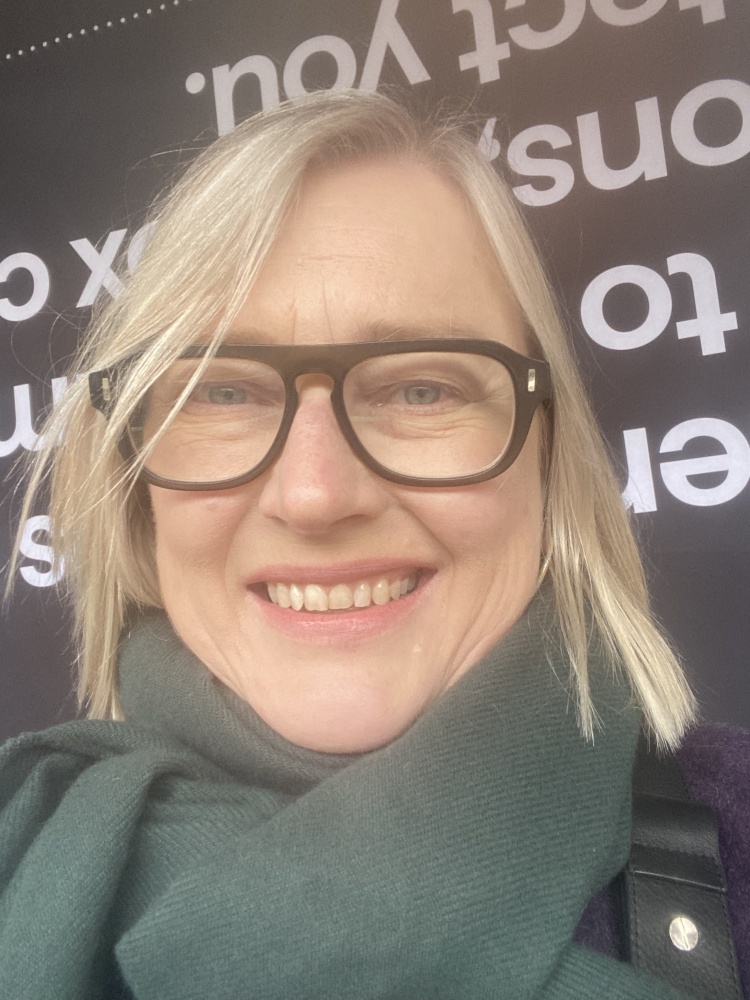
Helena Reckitt (photograph: Helena Reckitt) 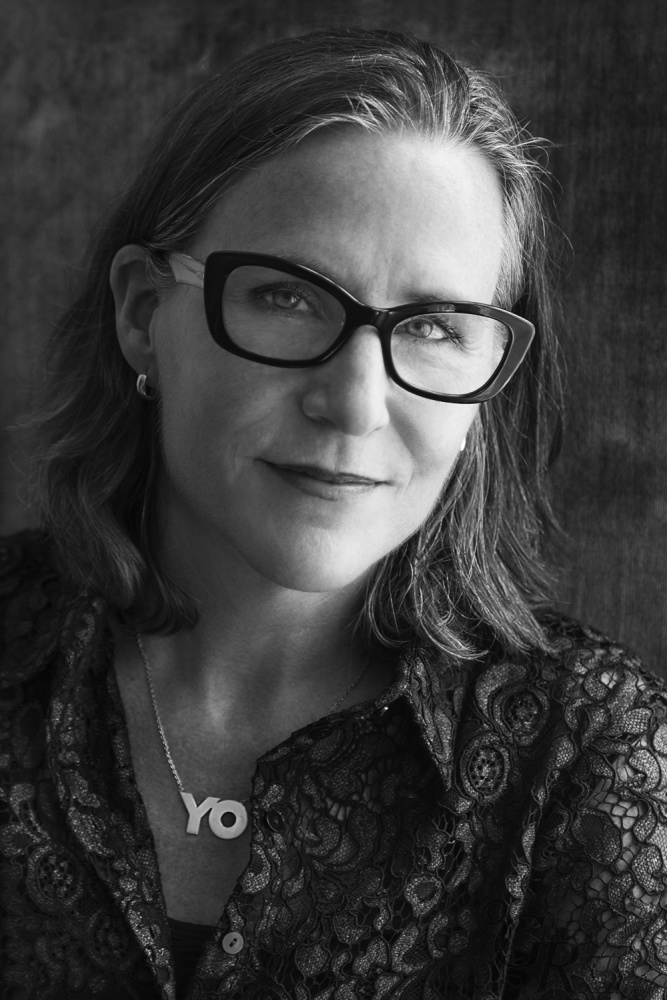
Maura Reilly (photograph: Grace Roselli)
Joyce Kozloff (b. 1942, New Jersey) is a major figure in both the feminist and Pattern and Decoration movements of the 1970s. She was a founding member of the Heresies collective, which published a quarterly journal about art, feminism, and politics. In 1979, she began to focus on public art and has since executed seventeen major installations in public spaces. Her studio practice encompasses painting, sculpture, installations, printmaking, and photography. Since the early 1990s, Kozloff has used cartography as a device for contextualizing her longstanding interests in systems of power, knowledge production, and popular arts. Kozloff was the subject of the CAA114 Annual Artist Interview in 2026.
Helena Reckitt is Reader in Curating, Goldsmiths, University of London. She is the editor of Art and Feminism (2001), The Art of Feminism (2018; 2022), Acting on AIDS (1997, with Josh Oppenheimer), Sanja Iveković: Unknown Heroine – A Reader (2013), and, with Jennifer Fisher, two issues of the Journal of Curatorial Studies on affect and curating.
Maura Reilly is Director of the Zimmerli Art Museum and Professor of Art History at Rutgers University. She is the founding curator of the Elizabeth A. Sackler Center for Feminist Art at the Brooklyn Museum, and the author of several books, including, among others, Curatorial Activism (2018), Museums & Social Justice (2026), and Speculating Otherwise: Feminist Art Now (forthcoming), co-authored with Liisa-Rávná Finbog.
- Using statistics, the report demonstrated the lack of female representation in LACMA exhibitions and collections. It determined that of the fifty-three solo-artist shows at LACMA from 1961 to 1971, only one was dedicated to a woman artist, Dorothea Lange. It also showed that 4 percent of works displayed in LACMA group shows during that period were by women artists. ↩
- Speakers and subjects at the 1974 panel were: Nancy Spero: Ende, 10th century; Therese Schwartz: Caterina Vigri (1413–1463) and Properzia de’ Rossi (1490–1530); Camille Billops: Tahia Halim (1919–2003); Sylvia Sleigh: Angelica Kauffman (1741–1807); Joyce Kozloff: Frida Kahlo (1907–1954); May Stevens: Alice Neel (1900–1984); Barbara Zucker: Florine Stettheimer (1871–1944); Audrey Flack: Luisa Roldan (1652–1706); Gilah Hirsch: Emily Carr (1871–1945); Howardena Pindell: Colette Omogbai (b. 1943). ↩