
By Alex Kitnick
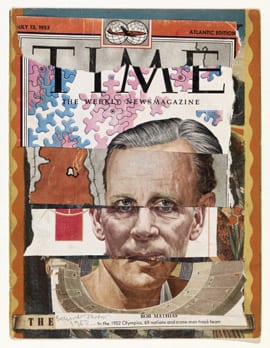
Sometime in the early 1950s, the artist Eduardo Paolozzi began making collages from the covers of Time magazine, cutting them up and putting them back together again in new ways.
By Alex Kitnick
Sometime in the early 1950s, the artist Eduardo Paolozzi began making collages from the covers of Time magazine, cutting them up and putting them back together again in new ways.
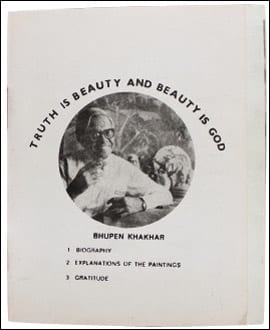
From Art Journal 71, no. 2 (Summer 2012) Bhupen Khakhar self-produced a catalogue to accompany his March 1972 exhibition Truth…
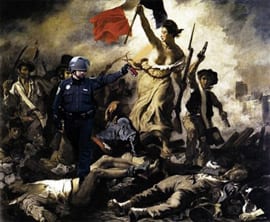
Julia Bryan-Wilson’s essay “Invisible Products” explores a most unusual archive of photographs by Ansel Adams—some seven thousand photographs he took in the mid-1960s on commission from the University of California.
By Jaimey Hamilton
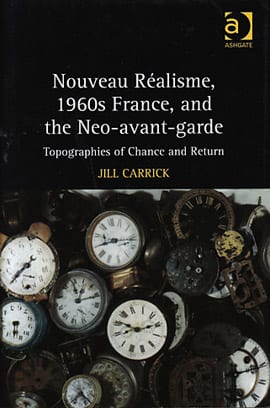
The term nouveau réalisme, or new realism, has long been tied to the specific claims made by the critic Pierre Restany about the Paris-based art group he promoted. Restany convinced Arman, Yves Klein, Jean Tinguely, Daniel Spoerri, Martial Raysse, Jacques de la Villeglé, Raymond Hains, and François Dufrêne to sign on initially, and then added César, Niki de Saint-Phalle, Gérard Deschamps, Mimmo Rotella, and Christo.
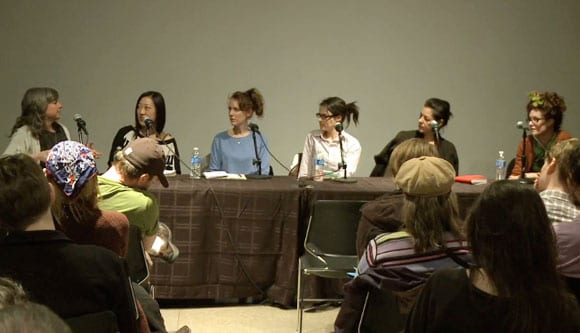
By Young Jean Lee
The panel discussion in this video took place at the Brooklyn Museum’s Elizabeth A. Sackler Center for Feminist Art on March 11, 2012. I put the public presentation together after receiving numerous e-mails from young female theater-makers who wanted advice on how to get their work produced.
By Katy Siegel
It can seem as if recent changes in how we learn do little more than facilitate a quantitative randomness. But the centrality of the Internet to intellectual work has made visible one under-recognized and revolutionary truth: the collective nature of creating knowledge.
By Malik Gaines
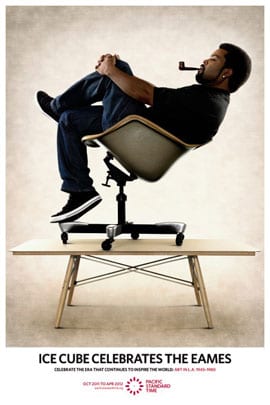
A marketing triumph, Pacific Standard Time has been responsible for a series of promotional videos, slickly produced, that pair an honored artist with a Southern California celebrity. The shining success among these original works is the pairing of the late design team Ray and Charles Eames with the rapper and actor Ice Cube.
By Jennifer Doyle
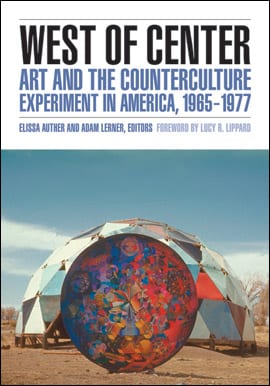
Los Angeles mythology is hard to cut through: The city has no center, no sense of history, it has no depth. It is the city that plays itself and the city that forgets itself.
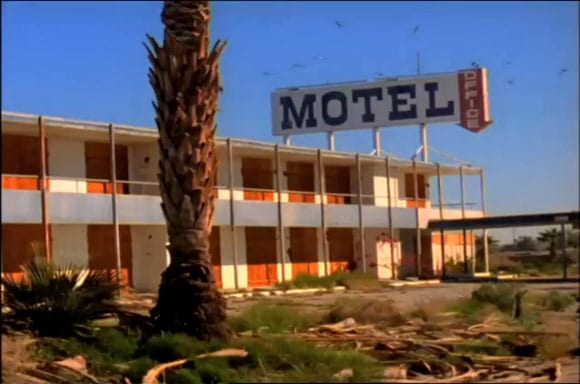
By Lee Anne Schmitt
I finished the film California Company Town in 2008. The film was a way of looking at the fallibility of history, to be able to depict a process of political thought against the markings it makes on landscape. Most of my work combines official and anecdotal histories.
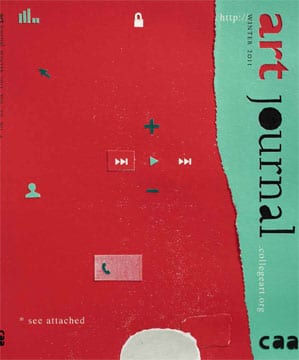
In This Issue Katy Siegel, In Print, 5 Artist’s Project Matthew Brannon, Pressing the “Delete” button, not pressing the “Are you…
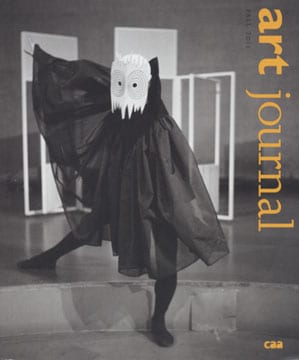
In This Issue Katy Siegel, Reconstruction, 5 Centennial Essay Krista Thompson, A Sidelong Glance: The Practice of African Diaspora Art…
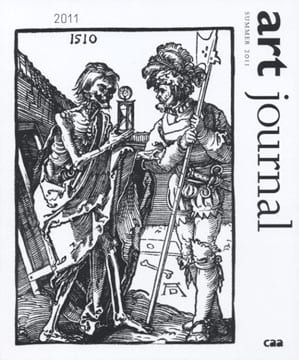
In This Issue Katy Siegel, Making Time, 5 Centennial Essay Nora A. Taylor, Art without History? Southeast Asian Artists and…